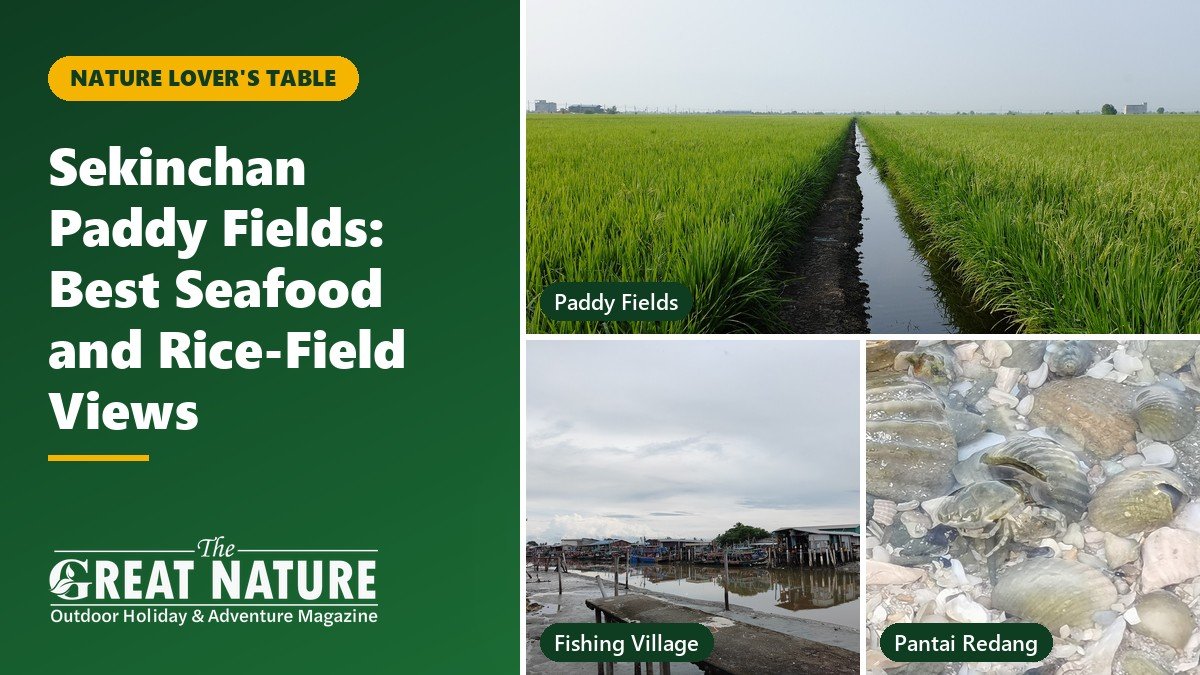
Some meals taste better because of where you eat them. On Selangor’s north-west coast, the Sekinchan paddy fields stretch flat and green towards the horizon, and the sea is never far away. As a result, a day here offers two simple pleasures: wide rice-field views and seafood landed that same day by the local fishing boats.
Why the Sekinchan paddy fields feel so special
Sekinchan sits in the Sabak Bernam district, roughly 100 km from Kuala Lumpur. It is often called the “Rice Bowl of Selangor”, because rice has shaped the town, its landscape and its daily rhythm for generations.
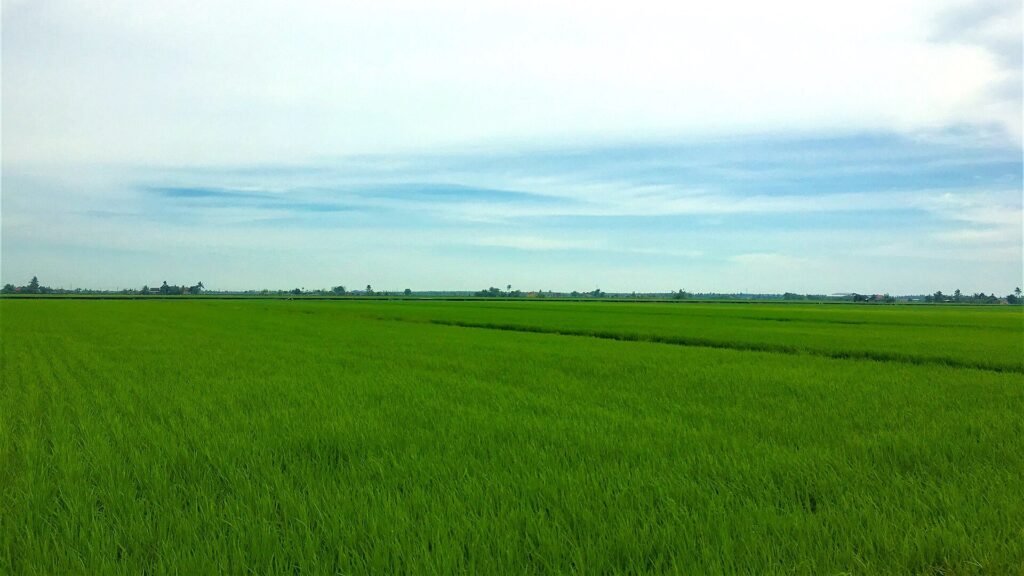
The fields are divided into neat rectangles by drainage channels and low bunds, so farmers can flood them for planting. Moreover, these canals work as a kind of man-made wetland. Egrets, herons and kingfishers often feed along the water, so keep an eye on the ditches as you drive.
According to Tourism Selangor, the rice land here spreads along Federal Route 5 and covers a very large area. In general, the paddy lies on the inland side of the road, while the fishing village sits on the coast side.
Good to know: From KL, most people drive to Kuala Selangor first, then follow Route 5 north for about 30 km. Allow around two hours, depending on traffic.
Green or gold: when to visit the Sekinchan paddy fields
Sekinchan usually grows two rice crops a year, so the view changes with the season. First, the fields are flooded and planted, and they look like long, shining mirrors. Then the young rice turns them a bright, almost glowing green.
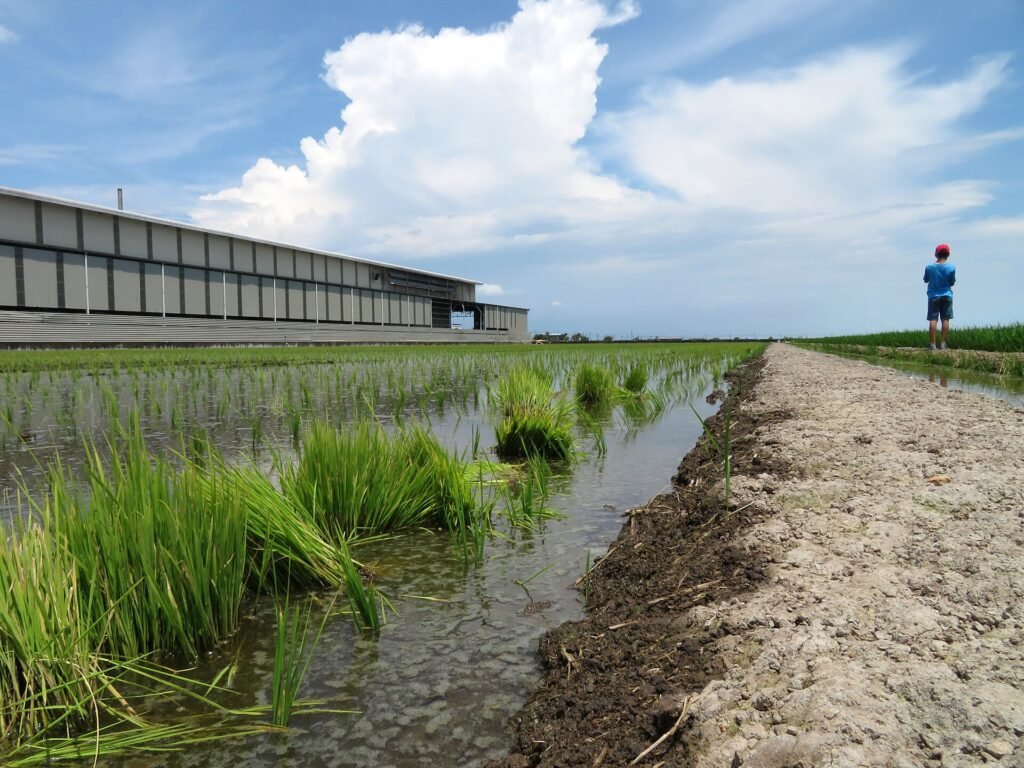
Finally, as the grain ripens, the green fades to gold before harvest. Tourism sources suggest sowing happens around March to April and August to September, with harvests around May to June and November to December. However, planting dates shift with weather and water, so treat these months as a rough guide only.
Good to know: Straight after harvest, the fields can look bare and brown. For the classic view, aim for the green or golden weeks.
Fresh seafood at Bagan fishing village
Many visitors come to Sekinchan for the food, and the fishing village of Bagan is where most of it begins. This small community, largely of Teochew Chinese heritage, sits on a sheltered inlet lined with stilted houses and colourful boats.
In the early afternoon, boats return to unload their catch, and the jetty becomes busy with buyers. In addition, wooden fishing boats are still built here using traditional methods, which is a rare sight today.
Seafood restaurants line the streets nearby, and seafood porridge is a local favourite. Because menus and catches change daily, simply ask what came in that morning and order that.
Good to know: Restaurants get crowded on weekends and public holidays. Arrive before the lunch rush, and check opening days on official channels before you go.
Rice, fruit and paddy-side cafés
Rice is the town’s pride, and some local rice mills welcome visitors. For example, a paddy gallery in Sekinchan explains how grain becomes brown, white or “embryo” rice, and it is a good stop with children.
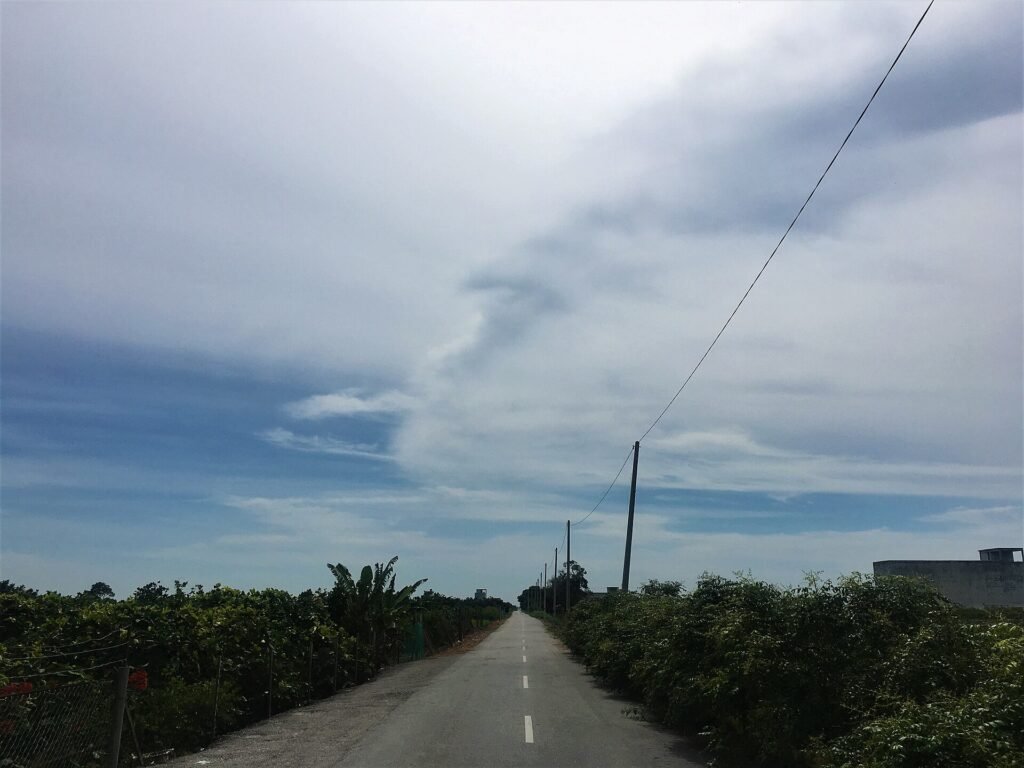
Also, look out for fruit. In season, roadside stalls on the main road sell mangoes, ciku, jambu air and sweet corn from the farms and orchards around town. Meanwhile, a handful of small cafés now sit right beside the paddy, so you can sip a cold drink with green fields all around you.
Good to know: Rice from the local mills makes a thoughtful souvenir. Buying direct also supports the farming families who keep this landscape alive.
Pantai Redang: sea air after lunch
After a big seafood meal, walk it off at Pantai Redang, a small beach near the old jetty. Local families picnic under the trees here, and early mornings are usually the quietest time to visit.
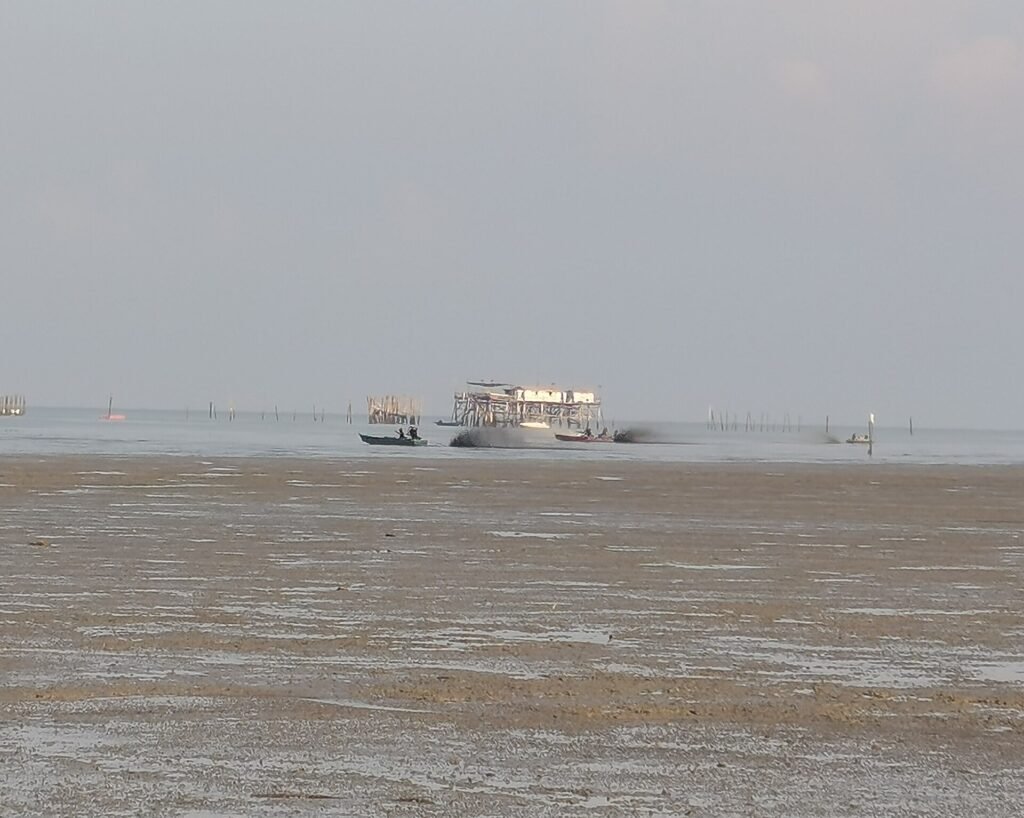
This is not a white-sand holiday beach. Instead, at low tide you will find wide mudflats, shells and tiny crabs, and the shore attracts birds. Nearby, a tree outside a temple is covered in red ribbons tied by visitors, and it has become one of Sekinchan’s best-known photo spots.
Good to know: Bins can be scarce, so carry a bag and take your rubbish home with you.
Tips for a gentle day out
- Stay off the bunds. The fields are working farms, so only walk where paths are clearly open to visitors.
- Go early or late. There is almost no shade, so morning and late-afternoon light is cooler and also better for photos.
- Bring sun protection. A hat, sunscreen and plenty of water are essential on the open plain.
- Try a bicycle. The flat, quiet farm roads suit easy cycling, although they get muddy after rain.
- Book ahead if staying. Accommodation is limited to small hotels and homestays, so plan early for weekends.
- Leave no trace. Take all rubbish home, keep noise low and never feed wild birds.
In the end, the Sekinchan paddy fields remind us that food and nature belong together. The rice on our plates and the fish in our curries come from landscapes like this one, cared for by farmers and fishermen every day. Moreover, Sekinchan pairs well with a firefly evening on the way home, so read our Kuala Selangor fireflies guide to plan a full day on the coast.
Have a favourite meal with a nature view in Malaysia? Tell us about it. We may feature it in a future story. Get in touch.
Feature image photos: Paddy Fields: Hashvina / Wikimedia Commons, CC BY-SA 4.0; Fishing Village: Fikku fiq / Wikimedia Commons, CC0; Pantai Redang: Cerevisae / Wikimedia Commons, CC BY-SA 4.0.