Rain is part of life in a rainforest country, and a wet night under canvas can be wonderful. However, the monsoon brings heavier, longer downpours, and rivers can change in minutes. This guide to monsoon season camping covers when the rain comes, where to pitch, and how to keep yourself and your group safe.
Understanding Malaysia’s monsoon seasons
Malaysia has two main monsoons. First, the Northeast Monsoon usually runs from around November to March. It brings the heaviest rain to the east coast of the Peninsula, as well as Sabah and Sarawak, and the wettest spells often fall early in the season.
By contrast, the Southwest Monsoon, from around May to September, is generally drier. In between come the inter-monsoon periods, roughly April to May and October to November. During these weeks, afternoon and evening thunderstorms are common, especially on the west coast.
Start dates shift a little every year. Therefore, check the outlook and any warnings from MetMalaysia before you plan a trip, and look again on the morning you leave.
Good to know: MetMalaysia issues weather warnings in levels, from Alert (yellow) to Danger. If your area is under a warning, postpone the trip.
Monsoon season camping: choosing a safe pitch
Where you sleep matters more than anything you pack. Above all, avoid pitching on riverbanks, sandbars, small islands in the stream or dry channels. These are the first places to flood when water rushes down from the hills.
Instead, choose firm, slightly raised ground well back from the water. Many experienced guides suggest at least 50 metres from a river, and more is better. In addition, look up: avoid camping under dead trees or heavy, cracked branches, because wet soil and strong wind can bring them down.
Also, steer clear of steep slopes and freshly cut hillsides, where soaked ground can slip. If you use an established campsite, ask the operator where their higher, safer pitches are. Moreover, follow any closure notice without argument: it is there for a reason.
Good to know: Malaysia’s fire and rescue authorities have advised campers to postpone trips near rivers and waterfalls during the rainy season. Riverside spots are best saved for drier months.
Know the warning signs of a flash flood
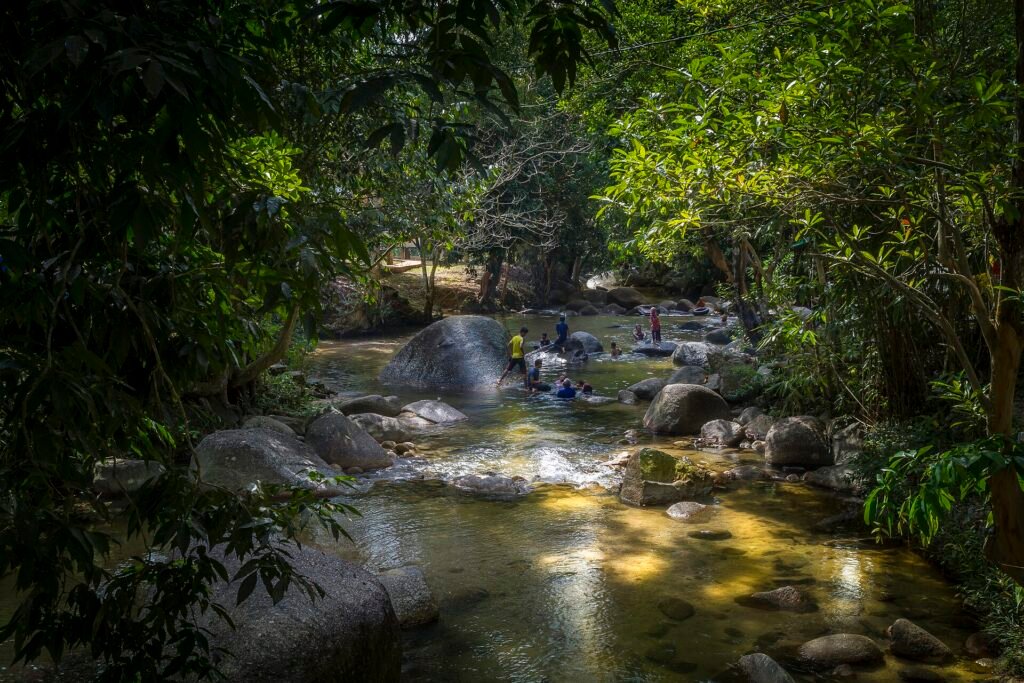
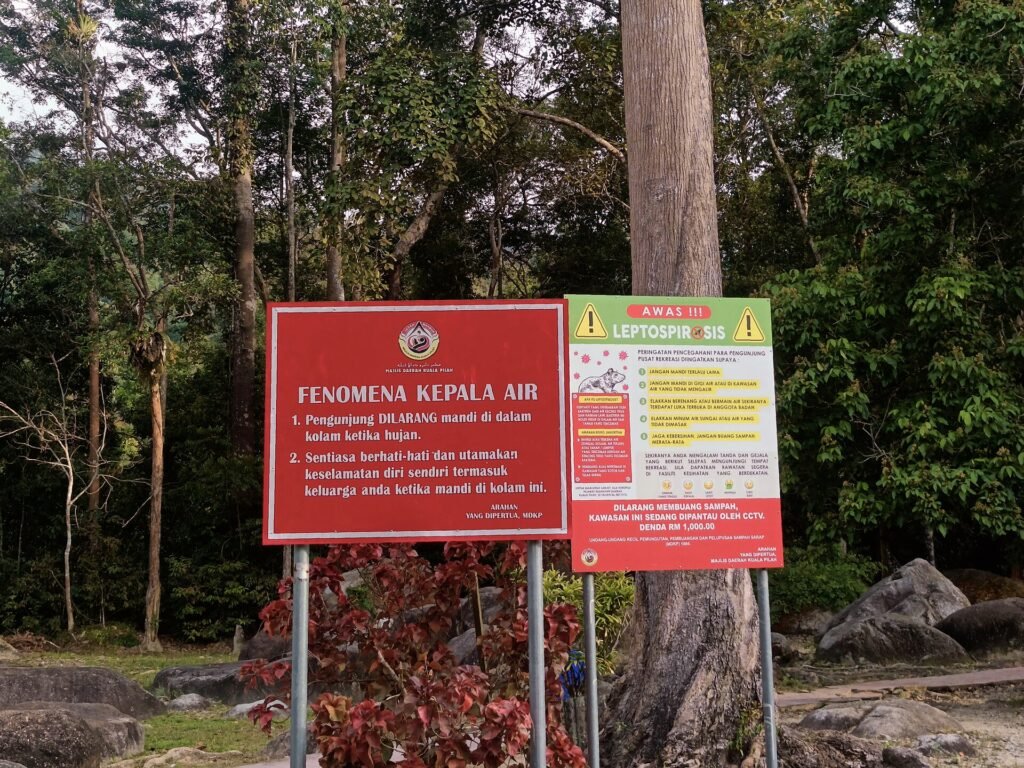
Locally, a sudden river surge is called kepala air. It happens when heavy rain falls upstream, often far from where you are camped. As a result, the sky above you may be clear while a wall of water is on its way.
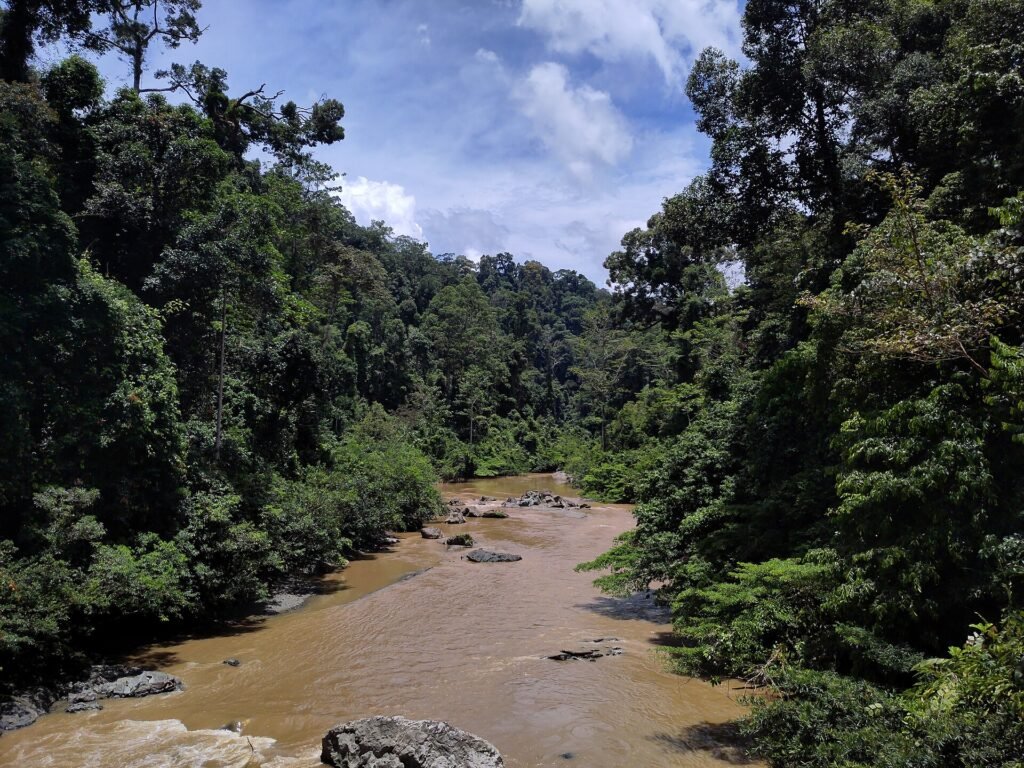
Watch the river closely, especially in the afternoon and at night. Then move to higher ground at once if you notice any of these signs:
- The water level rises quickly or suddenly.
- Clear water turns brown and muddy.
- The current gets stronger or louder.
- Leaves, twigs and branches start floating past.
Do not wait to see how high it gets, and never go back for gear. Tents and stoves can be replaced; people cannot. For river levels in your area, the government’s Public InfoBanjir site is also worth a look before you go.
Gear that keeps you dry
Good gear turns a soggy night into a cosy one. First, use a tent with a full-length rain fly and a sewn-in groundsheet, and pitch it tight so water runs off rather than pooling.
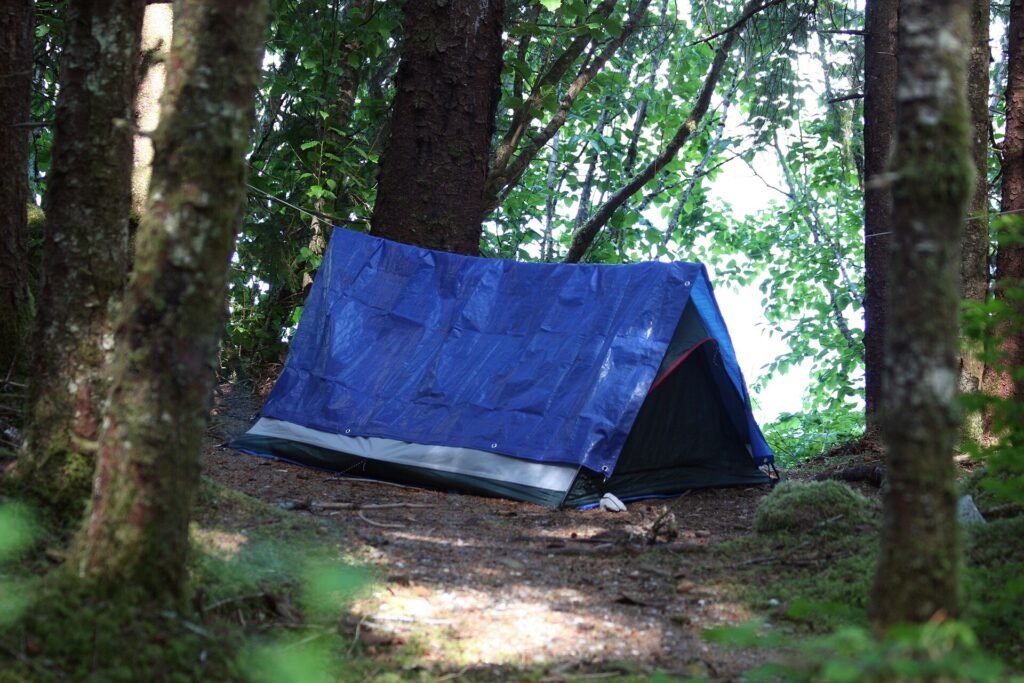
Next, rig a tarp over your tent and a second one over your cooking area. Angle it so rain drains away from the doors. Then pack clothes, phones and torches in dry bags, and keep one set of dry clothes just for sleeping.
Finally, bring a reliable headlamp with spare batteries, because storms make evenings dark early. In addition, a light poncho and quick-drying clothes help far more than cotton in humid, wet weather.
Storms, lightning and wet-weather health
Thunderstorms build fast in the tropics. If you hear thunder, get out of the water, leave open ground and ridgelines, and keep away from tall, isolated trees. A solid building or a car is safer than a tent.
Similarly, take care with floodwater and murky streams. Leptospirosis, often called kencing tikus, can spread through water contaminated by animal urine. So avoid swimming after heavy rain, cover any cuts, and wash your hands with clean water before eating.
Monsoon season camping checklist
- Check before you go. Read the latest forecast and warnings, and call the campsite or park about access.
- Share your plan. Tell someone at home where you are going and when you will be back.
- Pitch high and back. Choose raised, firm ground well away from rivers, slopes and dead trees.
- Agree an escape route. Know which way is uphill before dark, and keep torches by the door.
- Take turns watching. If camping near any water, have someone check it during heavy rain at night.
- Pack it dry. Use dry bags, a tarp and a spare set of sleeping clothes.
- Keep children close. Never let them play near rivers or drains after rain.
- Leave no trace. Don’t dig trenches around tents; choose well-drained ground instead, and carry all rubbish home.
In the end, monsoon season camping is about respect: for the rain, for the rivers and for the forest that depends on them. When in doubt, wait for a clearer weekend. The trees will still be there, greener than ever. Then, once the skies settle, riverside spots like those in our Janda Baik riverside camping guide are ready to welcome you back.
Do you have your own wet-weather camping tips? Share them with us. We may feature them in a future story. Get in touch.
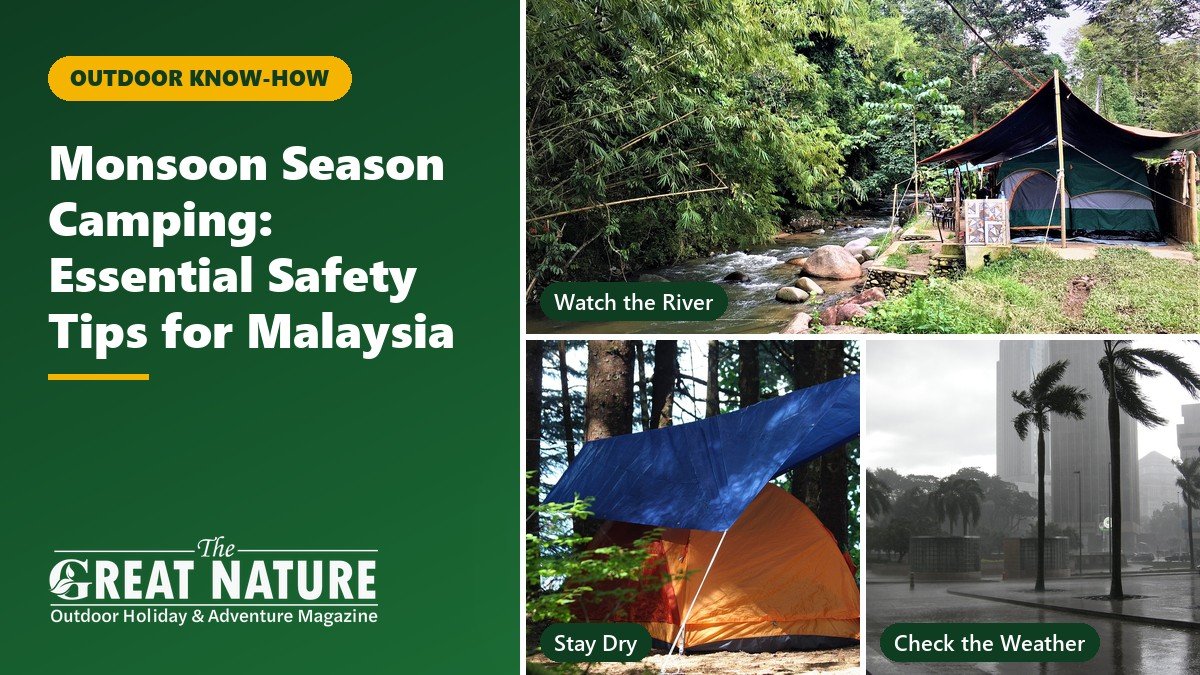
Feature image photos: Watch the River: Slleong / Wikimedia Commons, CC0; Stay Dry: National Park Service / Wikimedia Commons, Public domain; Check the Weather: Vyacheslav Argenberg / Wikimedia Commons, CC BY 4.0.